
About Fidel Strub
“They judged and labelled me before they listened. It shaped me in ways words can't express.”

Two homes, one conviction
I was born on 24 May 1991 in Ouagadougou, Burkina Faso, and I grew up in Arisdorf, Switzerland. My roots are Burkinabe. My home is Swiss. I learned early that identity is not given. It is claimed.
At the age of three, I survived Noma, a disease that eats the face and kills most of the children it touches, usually in the world's poorest places. I needed 28 reconstructive operations. For years I fought for acceptance of my face and my identity, and I carried questions that stayed with me for decades: Why me? And why do systems fail the people they claim to protect?
From patient to witness
I spent more than ten years inside the global health system, not only as a patient, but as a witness. I saw how organisations talk about the people they serve, and how often the public story does not match the reality on the ground. I saw survivors used as fundraising material instead of respected as the protagonists of their own recovery.
At some point I understood: pity helps no one. Change begins when you stop being only affected and start acting.
From voice to structure
I co-founded the Elysium Noma Survivors Association and was its architect: the name, the brand, the statutes and the operational framework were my design, and I led the organisation as Executive Director. Together with our partners and a growing community of survivors, we ran the global campaign that convinced the World Health Organization to recognise Noma as a neglected tropical disease. Along the way I spoke at the UK Parliament, at the World Health Assembly, at the TIME100 Impact Dinner, and on stages across the world, and I worked with partners such as Médecins Sans Frontières and DNDi.
In 2024, TIME named me one of the 100 most influential people in health. For me, that recognition was never about a person. It was proof that the standard I fight for matters: dignity and agency as verifiable practice, not as promises.
Today, through the Fidel Strub Forum, I speak, teach and advise. Through ALETHEIA TUTELA, I help organisations align their public story with their ground reality, using the Survivor Alignment Index, a diagnostic method I developed. I hold an active framework mandate with Swiss TPH, and I serve on the board of Noma-Hilfe Schweiz, where I have been involved since 2016.
Key milestones
Survived Noma at age three; 28 reconstructive operations.
2016-2026: joined Noma-Hilfe Schweiz
2022-2025: co-founded the Elysium Noma Survivors Association, led it as Executive Director.
2023: WHO recognises Noma as a neglected tropical disease, the goal of the campaign I helped lead.
2024: TIME100 Health honoree. Addresses at the UK Parliament and the World Health Assembly.
2025: founded the Fidel Strub Forum
2026: founded ALETHEIA TUTELA
2027: planned launch of ETHOS FIDELIS for biopharma and medtech.
Beyond the stage
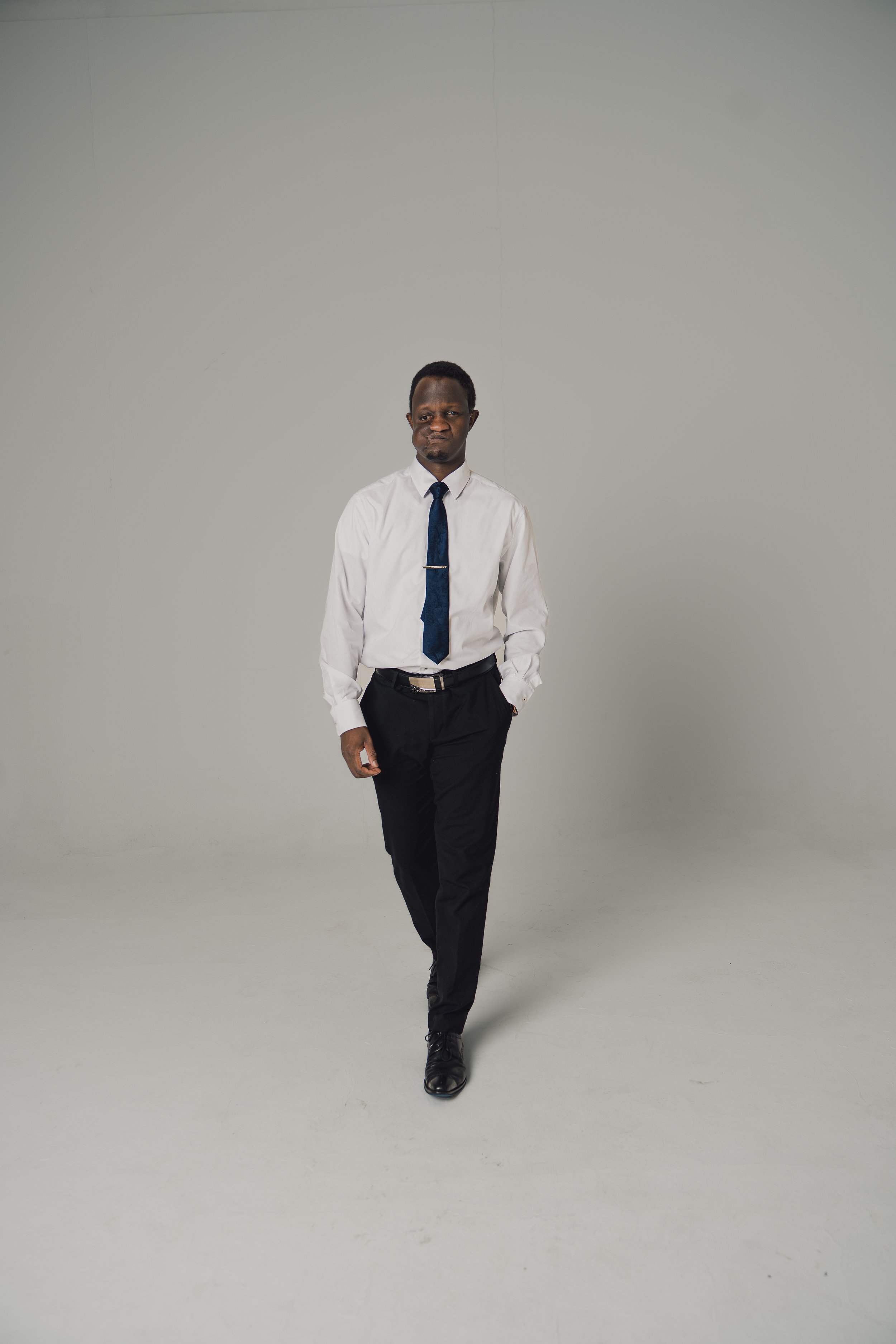
I also work as a model with Diversecity Models Berlin, because visibility is a form of resistance, and because representation matters everywhere, not only in policy papers. Every time a face like mine appears in a campaign, it quietly changes what people believe is normal, beautiful and possible.
What I believe
Dignity is not optional. Genuine representation is not decoration. It is operational integrity.
Communities must stay the drivers of their own recovery. Aid is a partnership, never a rescue story.
Quality needs a deliberate pace. I would rather do three things with full integrity than ten things for the optics.
Internal alignment matters: I treat my team, partners and clients with the same dignity I ask of the organisations I evaluate.